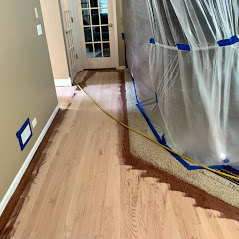
When Chicago’s cold weather rolls in, most homeowners focus on furnaces, insulation, and windows — but few realize their floors need winter protection too.
Snow, salt, and dry air can quickly dull and damage your hardwood, turning once-beautiful floors into worn, faded surfaces.
The good news? Winter is actually the best time to refinish them.
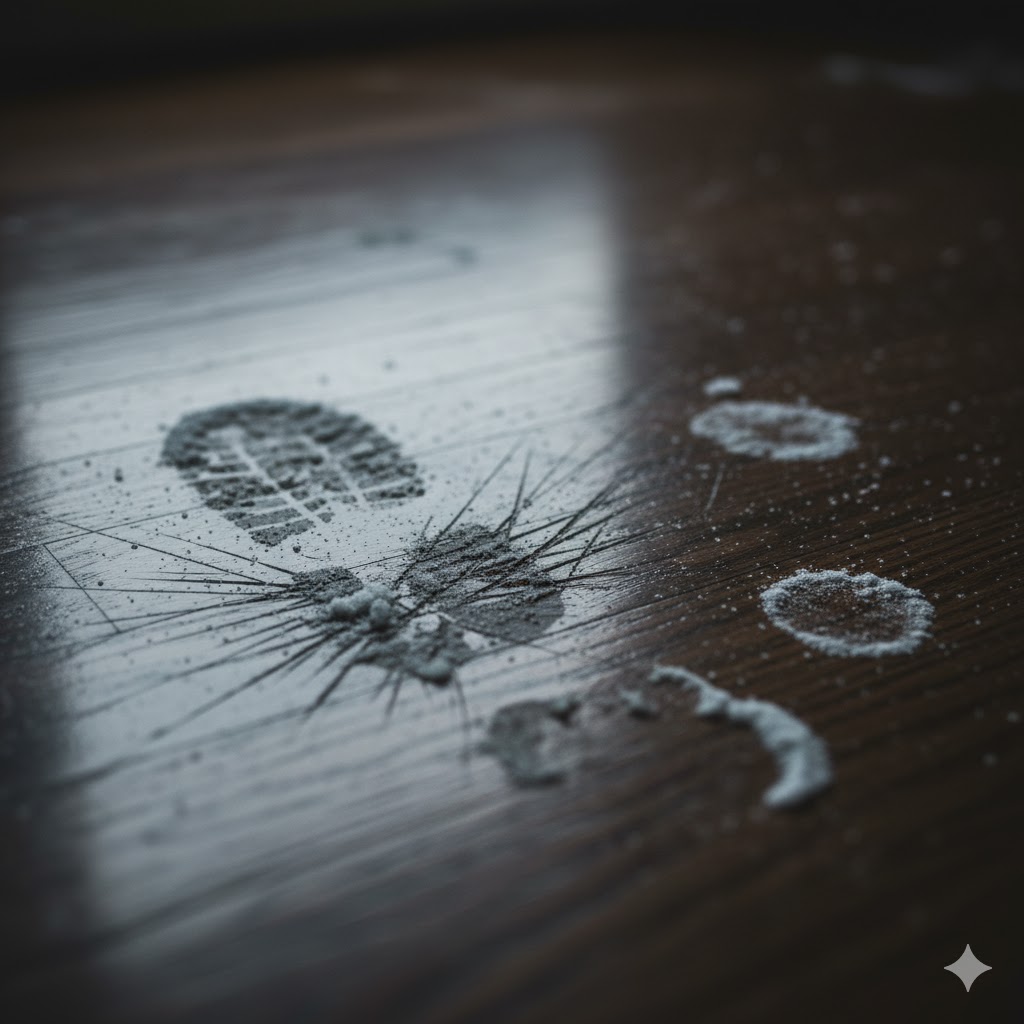
Before Winter: Floors Under Stress
From the moment the first snow falls, your floors start to face seasonal challenges:
- Melting snow & salt: Tracked in from boots, they leave behind scratches and dull patches.
- Dry indoor air: Causes wood to shrink and finishes to lose their luster.
- Holiday foot traffic: Adds extra wear during the busiest time of year.
Without care, those small issues pile up — and by spring, your hardwood floors look tired and uneven.
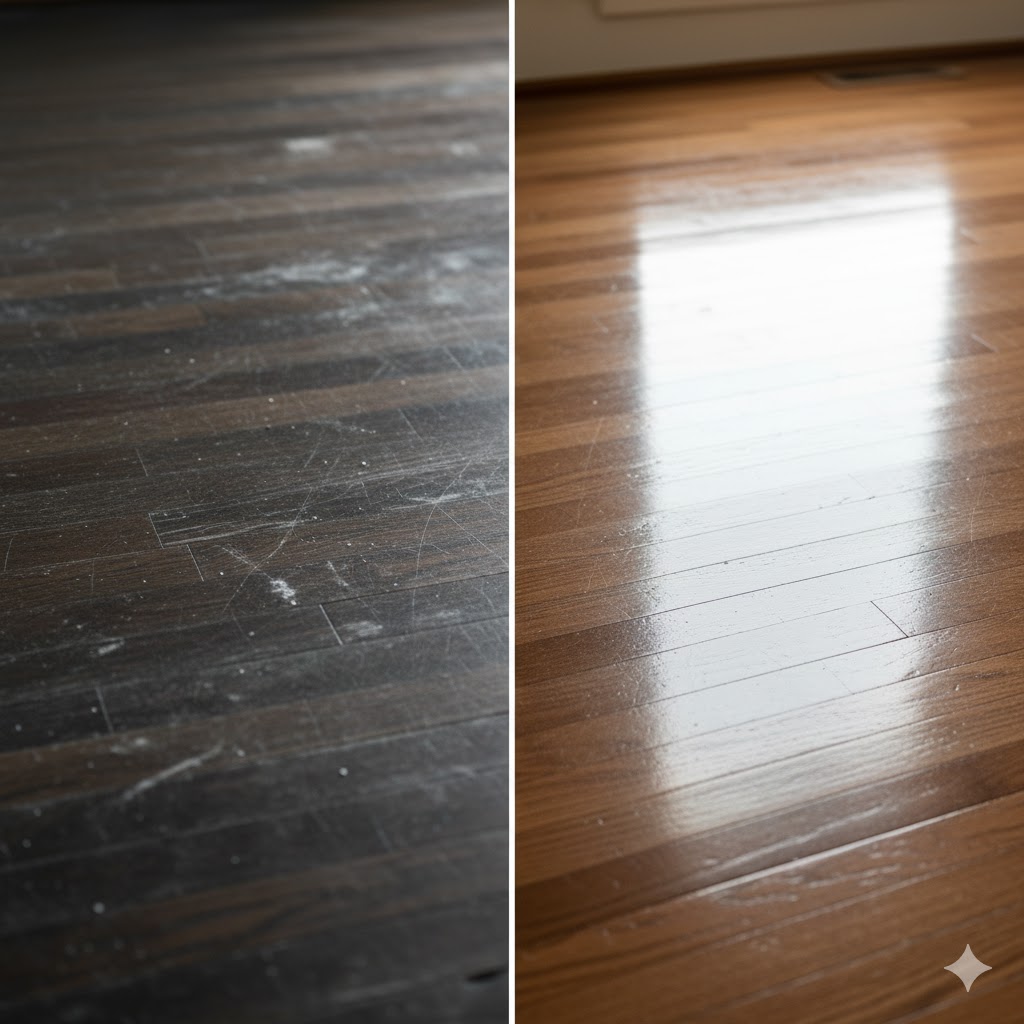
After Refinishing: Strength, Shine & Style Restored
Professional floor refinishing gives your home a complete refresh, just in time for cozy indoor months.
It removes surface wear, restores smoothness, and adds a new protective layer that shields against winter elements.
Here’s what you can expect after a proper refinishing:
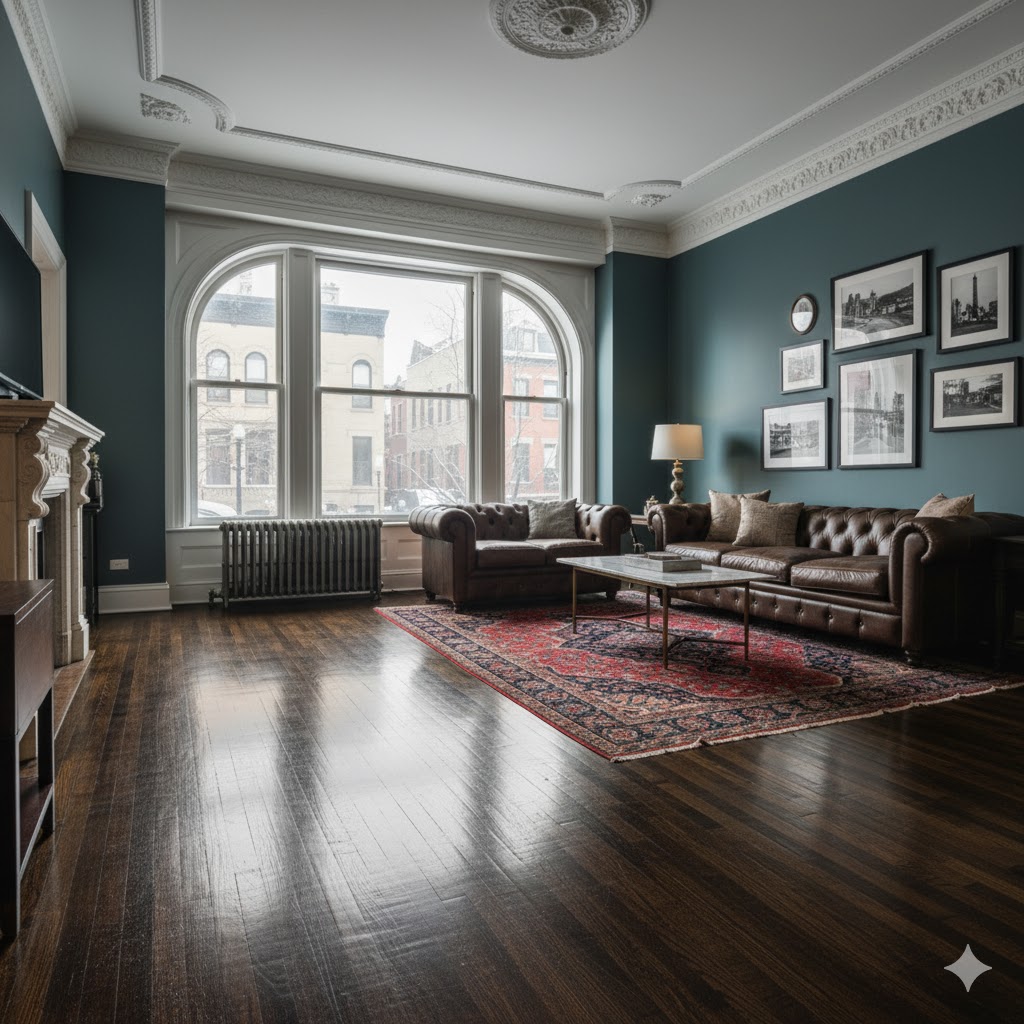
- Deep, even color that brings out the natural beauty of the wood
- A smooth, durable finish that resists salt and moisture
- Easier cleaning — no more dull or uneven spots
- Better indoor air quality with dustless sanding and low-odor finishes
It’s like giving your home a facelift without a full renovation — warm, polished, and ready for winter gatherings.
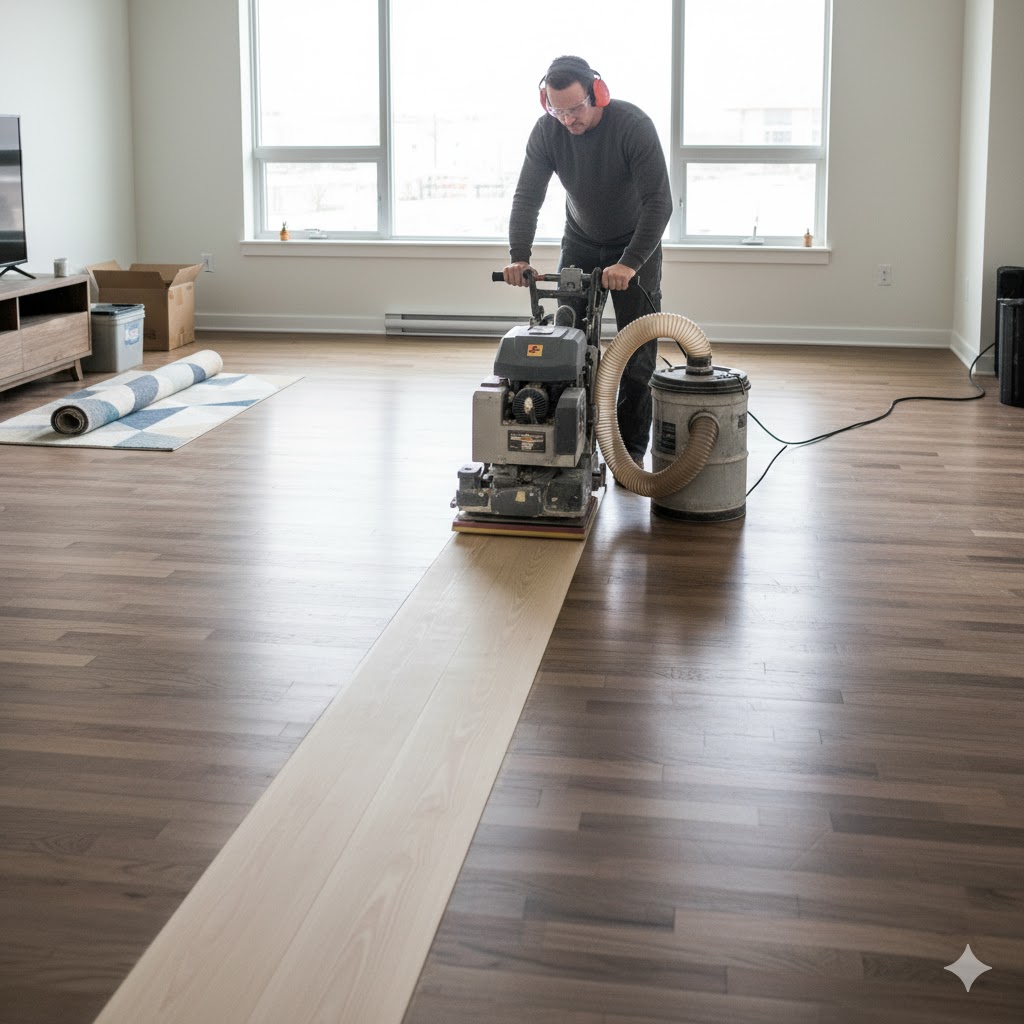
The Refinishing Process: What Happens Step by Step
- Inspection & Prep: Experts assess damage, stains, and wear patterns.
- Dustless Sanding: Old finishes and imperfections are carefully removed.
- Staining (Optional): Choose a custom tone — from rich walnut to modern gray.
- Protective Finish Application: High-quality, fast-drying sealants protect against moisture and scratches.
- Final Buff & Shine: The result is a flawless, like-new surface.
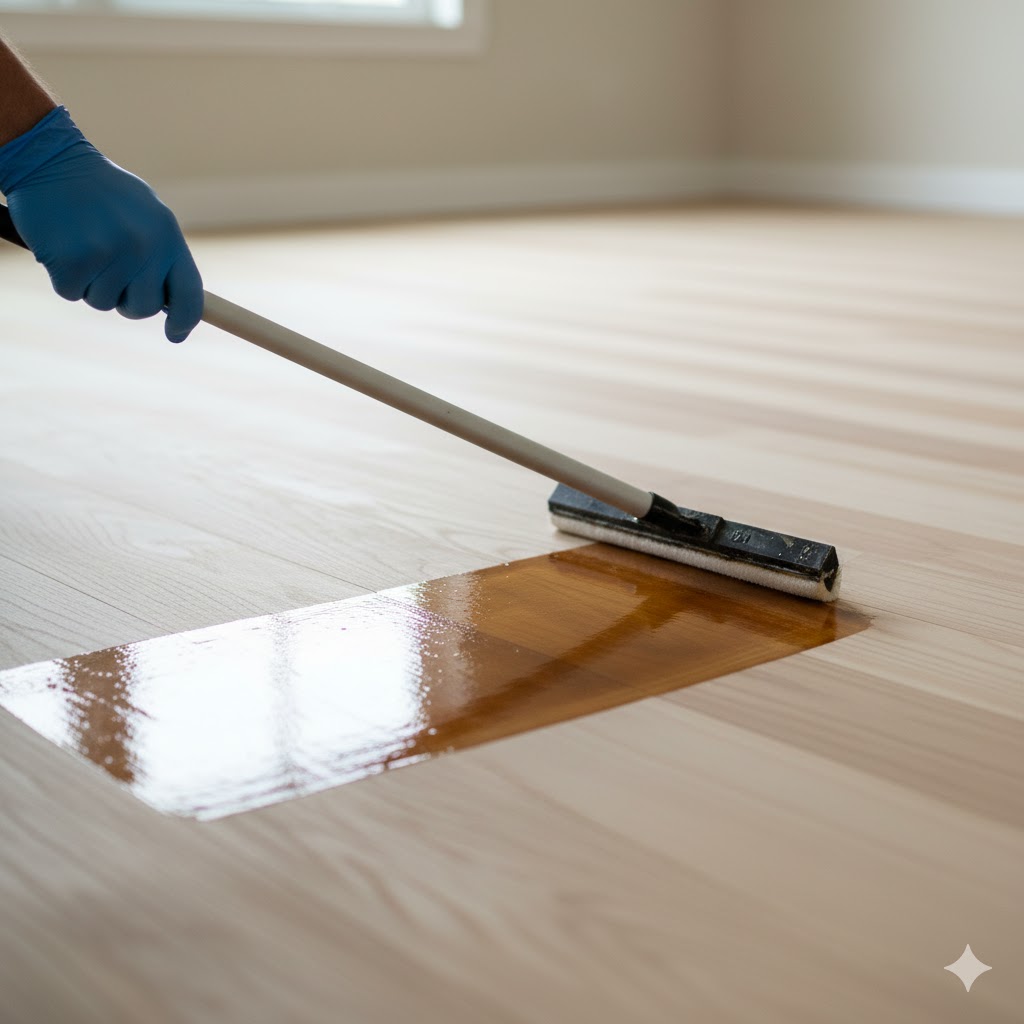
The process usually takes just a few days — and when done by professionals, it’s clean, quick, and minimally disruptive.
Why Winter Is the Best Time in Chicago
Here’s why flooring experts often recommend refinishing during the cold season:
- Lower humidity means finishes cure faster and more evenly.
- Contractors often have shorter wait times and flexible scheduling.
- The new finish protects against snow, salt, and water all season long.
- You spend more time indoors — so why not enjoy a beautiful floor?
Winter refinishing isn’t just maintenance — it’s comfort, protection, and style all in one.

Chicago Homes, Chicago Floors
Homes in and around Chicago experience unique challenges — older hardwood, high humidity swings, and salt exposure from entryways.
Local professionals understand these factors and use specialized products designed for Midwest weather, ensuring your refinished floors stay strong and stunning all year.
Ready to Refresh Your Floors This Winter?
Don’t wait until spring to repair what winter can damage. Bring warmth, shine, and value back to your home with a professional refinishing service.
Schedule your hardwood floor refinishing today with trusted Chicago flooring experts and enjoy beautifully restored floors for the holidays — and beyond.