How to Clean Hardwood Floors – 1.2

A popular new addition to many households throughout the country nowadays is hardwood flooring. It is reliable, elegant and seemingly easy to maintain. What people fail to recognize though, is that hardwood flooring must be treated properly if it is expect to last. Thus, when it comes to cleaning hardwood flooring, one must know the proper steps to take to get a satisfactory result without damaging the flooring.

The first thing that must be done is to create preemptive steps to make sure your hardwood flooring doesn’t get ruined. Place walk-in mats at doorway entrances to make sure particles of dust are collected and don’t ruin your expensive flooring. These act as “sandpaper” and over time will grate your floor. Most hardwood floors can be used on with a good swindel sweeper mop and quality wood floor cleaner. Do NOT use anything that might scratch or ruin your floor, such as steel wool to scratch out stains. Quality cleaner and an efficient mop should always do the job. If it is an extreme case such as spilled paint, you must learn more information on how to remove it. Yet in that instance, you would want to use paint remover.

Floors with a urethane finish should NEVER be waxed for it’ll ruin the floor. You could use a small cloth to wipe out pesky spots, alongside with good cleaner. Make to sure to minimize contact with water to your hardwood floor. Seeing as it is still made of wood, if something such as a spill or a flood happens, immediately get the water out of there. Something drastic as a flood might permanently ruin your flooring and cause you to replace it.

If it seems like your floor is beyond cleaning and repair, you might have to take things to a whole another level. For one, you should consider screening and recoating. Screening the hardwood floor will allow you to remove the old layer of coat and paint, and recoating will let you put on a new one. Its like taking off a bad cover and replacing it with one better.

If your hardwood floor is damaged with cuts and cracks, it might be time to replace it. You could try to fix the solution by filling up the cracks with chestnut glue, when if properly placed might result in an illusion effect. This might be a temporary fix-up, or a permanent one depending on how much you care about the look of your floor. If its in a hard to reach corner, you should probably not worry about it. But many scratches in the middles or near the doorway of a floor will probably just look bad on you and you’ll most likely have to swallow your pride, unloose your purse strings, and get a new floor.

Another thing you must avoid is overexposure to sunlight. Over time the UV rays will make your floor look dried up and shriveled. When you leave your household, make sure to close your blinds when light is unessecary. Another problem might be scuffing by furniture. When you are moving furniture around make sure to cover the legging with some kind of protective cloth as to make sure your floor doesn’t get ruined.

The more time and effort you put into making your hardwood floor look good, and making sure it doesn’t get ruined, the longer it will last you. Per say if you do a good job, it just might last you a century! And really, those extra little things add to you avoiding to have to spend thousands on replacing your flooring. After all, its much easier to keep and maintain than carpet, and looks better to. Be happy you don’t need a heated cleaner to take out that wine stain, yet instead can just wipe it right off!
Characteristics of a Laminated Floor

A Laminate flooring is becoming more popular today all over the world, even though it started as a strictly European innovation. Laminated flooring is a good option for houses and offices which require a low maintenance solution. Laminated flooring has been known to be a great choice for its durability, attractiveness, and being easy to install. Laminated flooring is very affordable when compared to other flooring options. However, despite the fact that laminate flooring is popular, there are a many misconceptions. Before one should consider buying laminate flooring, several myths have to be cleared up.

 The biggest mistakes people make is confusing laminate flooring with solid hardwood flooring. The two should never be thought of as similar, (yet attractive laminate flooring can often resemble hardwood visually). Laminate flooring is not made of any real hardwood species. In fact, the surface of a laminate floor is actually a photograph, often of a hardwood species. Mind-boggling! This top, decorative layer, is sealed by a resin-based coating. This resin based coating gives the laminate flooring resistance to the many types of abrasion. The other two layers of laminate flooring are the core and backing layers. The core layer is most often made of high-density fiberboard, which serves as a means to absorb the stress of impact. The backing layer, (also known as the stabilizing layer), is the layer of the laminate flooring which binds all the other layer together.

One of the key characteristics of laminate flooring is how easy it is to install. Of the many designs, some of the more efficient designs are the glue free variety. With this variety, the laminate flooring is generally fitted together what is called a “tongue and groove” design, with interlocking elements that slide into place secure each row as it is laid down. Basically, unlike hardwood, no nails are required. Some types of laminate flooring feature more sophisticated locking systems. With some limited skills in carpentry, laminate flooring can be installed by “do it yourselfers” in most cases. Choosing to install laminate flooring cuts down on expenses, especially if you choose to not hire an installer, although many people do for the sake of convenience. Contractors also love laminate flooring, for it is a time-saving alternative to hardwood flooring allowing them to take on more contracts.

The Anatomy of Chocolate Cake and Hardware Floors, part 2

Plywood is an engineered wood. It’s made up of layers of cross-laminated wood veneer or layers of lumber with a central multi-layered core lumber strip. Engineered means that we added our own mix of science and material design principles to the original wood source to create our own form of “wood” – many people will refer to any manufactured wood product, even fiberboard, as “engineered wood.” Wood veneer over plywood is another type of engineered hardwood. However, wood veneer flooring can refer to fiberboard layered with wood veneer and kraft paper, or it can refer to wood veneer over plywood. Veneer is simply a thin sheet of wood. “Lamina” means a thin sheet or plate. “Laminated construction” implies that layering is a part of the process.

Laminate and engineered flooring are made from layers. Design, construction and manufacturing companies struggle to agree upon distinctions in terms. “Engineered” and “Laminate” define a process, but they are also often used to define material. Unfortunately, the terms are sometimes used to deceive consumers into thinking they’re buying a higher-quality product than they actually are. Make sure you identify the materials and layers of your flooring choice. Laminate flooring uses a printing process (or a sheet of wood veneer), wood chips or/or synthetic materials, along with some glue and heat to give you the look of finished hardwood. It’s similar to using artificial chocolate to create a surprisingly scrumptious chocolate cake.

Laminate flooring comes about 6-9 millimeters thick. The number of layers vary, but it’s usually between four and six layers. The layers generally include a top protective layer, the décor paper or wood veneer layer for the “look” of the hardwood, the baseboard and edging, and a stabilizing layer on the bottom that also works as a moisture barrier. The material used in laminate flooring is not consistent through manufacturers, so make sure you are buying a quality product. Accepted international standards rate A-1 for bedroom use to A-4 for commercial use.

It’s a lot easier to eat a piece of chocolate cake than it is to choose a hardwood floor, but by exploring the layers of hardwood flooring types you’ll better understand your hardwood floor plans. Then you can focus on the more delicious layers of a chocolate cake.

The Anatomy of Chocolate Cake and Hardware Floors, part 1

Unless you’re a termite, chocolate cake tastes better than a hardwood floor. But “Hardwood Flooring” describes flooring about as precisely as “Chocolate Cake” can describe the precise ingredients for a chocolate cake. One ingredient is common in every chocolate cake – and that’s chocolate. One ingredient is common in every hardwood floor – and that’s hardwood.

Chocolate cake ingredients can consist of pure chocolate, a mix of chocolates, artificial chocolate, or any one of 100 different percentages of chocolate as a part of the whole chocolate cake. It’s still called a chocolate cake. Hardwood floors can have pure hardwood, a mix of hardwood, a percentage of hardwood, or just look like hardwood. A cake can be one or many layers. A hardwood floor can be one or many layers. The differences will change quality, properties, texture and taste. (In most cases, a cake will always taste better than a floor. But there are always exceptions.)

Solid hardwood flooring is always 100% of one type of timber. Engineered hardwood flooring can be all wood, but it will have different types of timber. Wood veneer flooring has a thin wood layer frosted on top of another wood or non-wood layer. Laminate floors can be wood-laminate or plastic-laminate, and they may or may not contain natural hardwood. Not only do these flooring types contain different concentrations of wood, they are also all manufactured differently.

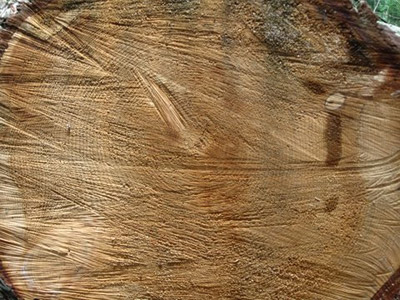
Solid hardwood floors are cut whole from a trunk of a tree. The wood is dried first, cut and planed down to size, then milled to precision so the strips, pieces or blocks can lock into place.

Engineered hardwood flooring is made from wood layers of (usually) different timbers. It goes through a longer manufacturing process than solid hardwood, and a special drying process tightens the sealed layers to restrict wood movement. Heat and pressure create the seal. Engineered floors with a layered 90-degree composition contribute to the floor’s steadfastness during temperature changes because the layers counteract each other. At temperature changes where solid hardwood floors contract and expand, engineered hardwood floors remain steadfast and true.

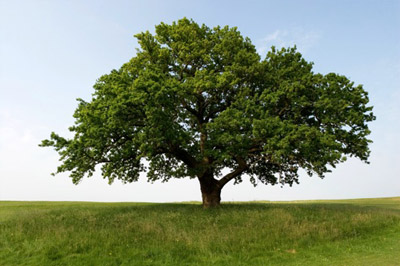
The Trees of Hardwood Flooring

Hardwood floors have a natural complexity, yet can bring luxurious simplicty or an intricately patterned design into any room. The long-lasting attributes of hardwood flooring and its ability to conform with the décor and design of any room makes hardwood flooring a flooring choice you can make in confidence. However, once you choose to install a hardwood floor, you have many other decisions to make. One of those decisions is to determine the type of hardwood you will be using for your floor.

Any wood that comes from a broad-leafed tree is considered a hardwood. Softwoods come from needle-bearing trees. Well-known hardwood-bearing trees are maple, oak, ash, hickory, chesnut, cherry, walnut, beech and the beautiful mahogany. There are many other hardwood trees around the world that fall under exotic or tropical hardwood categories, but you can also get the look of exotic finishes on less-expensive local hardwood if you don’t have an unlimited budget. Not all hardwoods are used for floors (ebony is an example) because the price would be exorbitant. If you are environmentally conscious, make sure you choose your hardwood from an environmentally sustainable forest. Characteristics of some hardwood species are unsuitable for flooring.

The grains of hardwood trees are larger than the grains of softwood trees, but each tree will come with its own characteristic grain, knots and pores. No two grains will be identical, because the grain of the tree is determined by the tree’s age, climate, cell structure and numerous other environmental factors. No other home in the world will hold the same grain pattern on its floor as yours. It is customary for retailers to charge more for a grain that is rich and fluid, or plainer and knot-free. Less expensive woods run in between the perfectly fluid and perfectly stark ideals.

Hardwoods will also vary in color – refreshing whites, warm reds, rich red browns, stark black browns, and neutral beiges are all available to fit into the color palette of your decorating scheme. You can also finish and paint a hardwood floor in virtually any color you can think of.

Oak and Maple are the two most popular choices for hardwood floors. Oak is an open-grained darker hardwood, with a strong, wider grain pattern. It does tend to absorb paint slowly. Maple is a light subtly grained hardwood, a good choice when a light, non-obtrusive floor is desired, and it willingly takes in a coat of paint. Maple, Ash and Beech are all lighter colored hardwoods with a close grain– although beech can run from a light red to a darker red. Ash is known to take on an excellent finish.

Walnut has a thicker grain and can carry the rich color of dark chocolate. It will take on a finish well if its large pores are filled. Teak and mahogany are darker colors sometimes used for floors, but are significantly pricier than traditional wood flooring material. Mahogany, walnut and cherry are considered to have medium pores. If you can’t resist the dark, rich colors and patterns of pricier exotic woods, but have to resist their price tag, you can always opt for a similarly colored finish or a less expensive hardwood laminate that has a thin layer of the desired wood affixed on top of less-expensive woods and materials.

Color and grain will help you decide on the type of hardwood you want for your floor. Keep in mind that colors, grains and knots will vary between each hardwood floor piece, even with the same tree species. But the shades, grain patterns and hues will blend together to create a naturally fluid design.

Look at your room’s color palette, furnishings, size and décor, and start comparing colors and grain patterns. By simply deciding if you want a dark wood or light wood you significantly narrow down your choices, and your complex decision can turn out to be satisfyingly simple. Once you choose your tree – your hardwood floor can be designed to be as complex or as simple as you want it to be.

Hardwood vs Flagstone

Floors in contemporary homes have come a long way. Wood and carpet are no longer the only options. Homeowners can choose from Ceramic tile floors, wood, vinyl, marble, linoleum and other beautiful choices. If you enjoy showing off your beautiful home, and floors, here are a few tips to make cleaning and condition easy.

HARDWOOD

Your beautiful hardwood floor might have a sealer on it like lacquer, varnish or shellac. If this is the case you will need to care for your floors with solvent-based cleaners and polishes. But if your floor is treated with polyurethane, you have a few more options for cleaning and shining your floor.

Hardwood floors can be cleaned with this really easy method. Two teabags steeped in a pot of boiling water. After a few minutes put the tea in something convenient to work with, like a bucket, and using a soft cloth soaked in the tea and then wrung out until it is only damp, wash the floor. The tannic acid in the tea will leave your wood floor with a beautiful shine.

To repair cracks in hardwood floors, borrow one of your child’s crayons, the color of the floor, and rub it into the gap, filling in the crack. Heat the repaired crack with your blow dryer and then buff the area with a soft cloth.

If you’d rather not use such homegrown methods, try cleaning your floors with a liquid floor cleaner for wood floors. Open a window or other source of ventilation since these stronger chemicals can combust. With a dry wax applicator, soak a small area and then wipe clean. When your floor is dry, buff it with a floor polisher.

FLAGSTONE

Natural stone floors give look contemporary and sophisticated. Cleaning these floors is a little more work than wood, but you will love the results.

Keep them looking their finest with a commercial sealer instead of varnish or lacquer. Dirt can be cleaned from your floor with a mixture of one-quarter cup of low-sudsing cleaner mixed with one-half gallon cold water and one cup ammonia.

Wearing work gloves and with an open window for ventilation, apply the mixture using a sponge mop. When ready to rinse the floor, use clear, cold water and buff dry with a soft rag.

Upkeep is an easier process using a damp mop with fabric softener in water and applied evenly with a mop. Fix a dull film appearance with a cup of white vinegar in water. Then sit back and admire your beautiful floors.

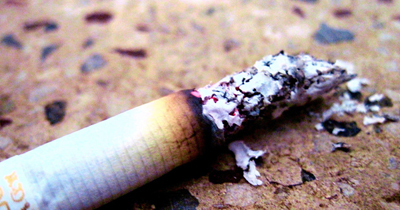
How to Remove Cigarette Burns in Wood, Formica, Fiberglass and Vinyl Flooring

If you found a used coffee table or piece of furniture you love, but you’re not infatuated with the patchwork of cigarette burns, there may still be hope for repair and revival. The same procedures that can save a tortured designer furnishing may also save your vinyl floor that suffered from the burning exuberance of your last celebratory party.

Wood is wonderful. It’s durable and sandable – and sanding is your saving grace. If you have a cigarette burn in wood that you’re trying to conquer, you’ll need paint and varnish remover, sandpaper (or steel wool, depending on the wood), finishing paint or stain, and varnish. The hardest part will be matching colors. (If you were considering restaining or repainting your furniture – now is the time.)

Carefully remove the paint over the cigarette burn with paint and varnish remover. Let it sit a little while to let the chemicals do their work. After the paint is removed and cleaned up, sand down the area so the cigarette burn hole is less noticeable. Then, paint or stain your matching (or new) color, and varnish the area to protect it.

If the cigarette burn is on Formica, fiberglass or vinyl, use powder cleanser like Comet or Ajax (scouring powder) to remove the discoloring. After cleaning the cleanser, simply use an automotive polishing compound to get back the original shine. In a worst-case scenario, you might just have to patch an area with a new piece, or a piece stolen from an inconspicuous area of the same material. (You can probably get away with removing vinyl tiling in a closet or a snippet of Formica or fiberglass from under a tabletop or under a seat of a chair.)

OLYMPUS DIGITAL CAMERA

It takes some work to get rid of those nasty burns, but you don’t have to pass up an intriguing piece of furniture, and you don’t need to re-tile your kitchen floor every time you have a party. Enjoy life, and enjoy a home without having to look at cigarette burns.